NAIROBI, May 12 (NECJOGHA News Desk – Africa’s regional climate centres are sounding the alarm over the emerging 2026 Super El Niño, warning that the phenomenon could trigger widespread disruptions to rainfall, food security, water resources, health, energy, and disaster risk across the continent.
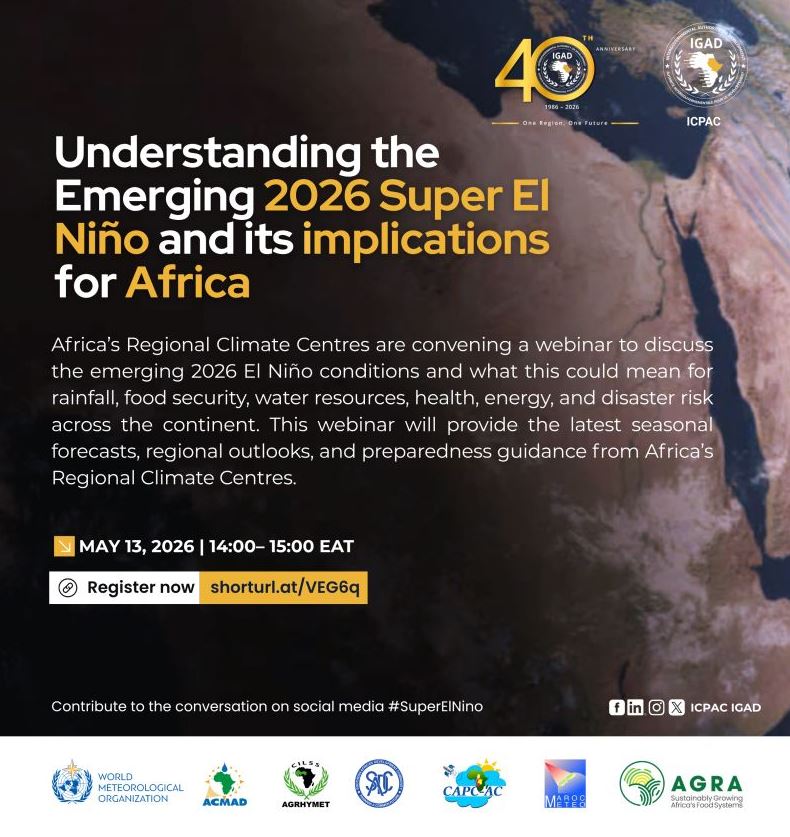
The Intergovernmental Authority on Development (IGAD) Climate Prediction and Applications Centre (ICPAC), alongside partners including the World Meteorological Organization, ACMAD, AGRHYMET, CAPC, and AGRA, will convene a webinar on May 13 to present the latest seasonal forecasts and preparedness guidance. The event, titled “Understanding the Emerging 2026 Super El Niño and Its Implications for Africa”, is scheduled for 14:00–15:00 East Africa Time.
El Niño events occur when sea surface temperatures in the central and eastern Pacific Ocean rise significantly, disrupting global weather patterns. A “Super El Niño” is characterized by extreme warming, often exceeding +2°C anomalies, and is associated with severe climate impacts worldwide. Africa has historically borne the brunt of such events, with the 1997–98 and 2015–16 El Niños causing devastating floods in East Africa and prolonged droughts in Southern Africa.
According to regional experts, East Africa could see suppressed rainfall during the June–September season, followed by intense flooding during the October–December short rains. Southern Africa faces heightened drought risk, threatening agriculture and hydropower generation, while the Sahel may experience erratic rainfall, worsening food insecurity in fragile states.
Sectoral impacts are expected to be far-reaching. Food production could decline sharply, water supplies may be contaminated or depleted, and health systems could face surges in malaria, cholera, and heat-related illnesses. Energy generation, particularly hydropower, is vulnerable to drought conditions, while disaster risks such as floods, landslides, and wildfires are projected to intensify.
The webinar aims to provide governments, humanitarian agencies, and communities with actionable insights to strengthen early warning systems and scale up anticipatory action. Organizers emphasize that translating forecasts into timely measures—such as pre-positioning food and medical supplies, investing in climate-smart agriculture, and enhancing community preparedness—will be critical to mitigating the impacts of the 2026 Super El Niño.
Registration for the event here: Register to join the webinar
Participants are encouraged to join the conversation on social media under the hashtag #SuperElNino.